Fire Damage Restoration Nashville, From Board-Up to Move-Back-In
The flames are the shortest part of a fire. Fire damage restoration Nashville families face afterwards is a longer job: a house open to the weather, rooms coated in soot the fire never reached, and hundreds of gallons of water sitting in the walls from putting it out. This page walks through the work in the order it actually happens, what your insurer will ask for, and how this service connects you with independent local providers who do the work.
- Secure the property first
- Soot cleaned before it sets
- Documentation your insurer can use
- Independent local providers
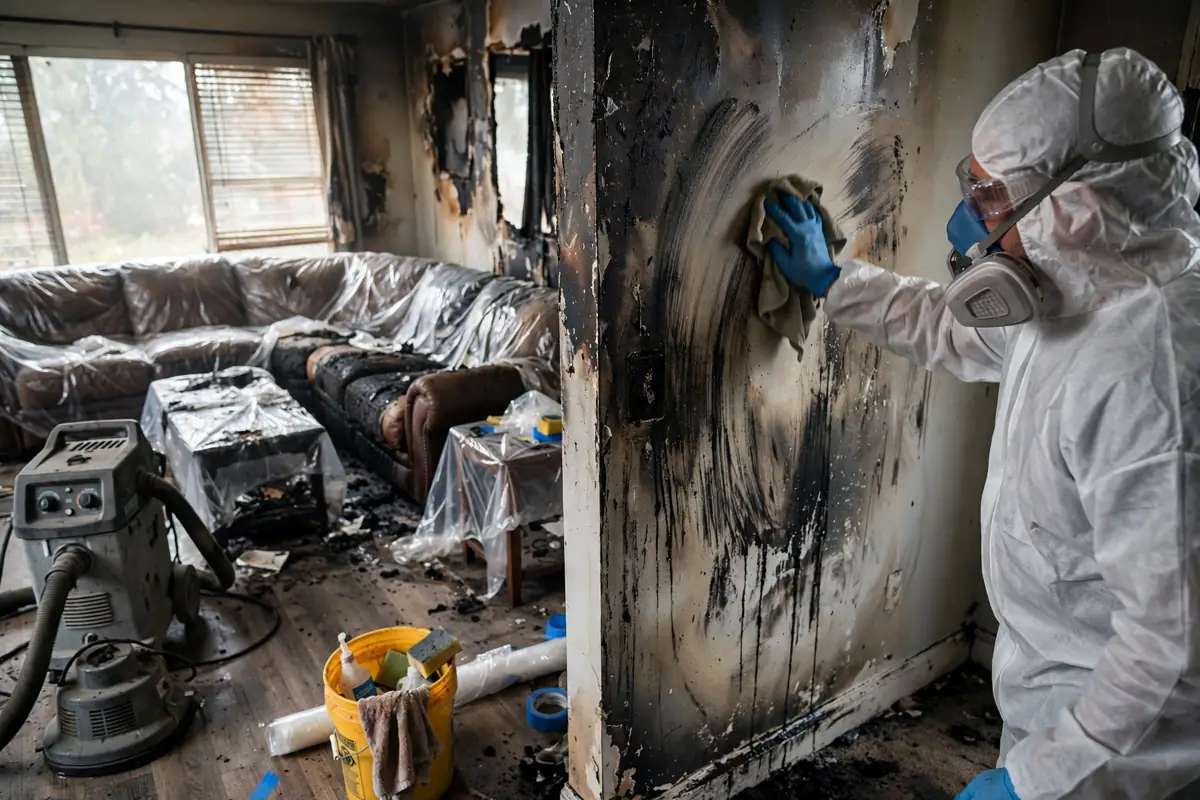
What happens after the fire trucks leave
Fire damage restoration in Nashville runs in a set order: secure the property, remove the water left by firefighting, clean smoke and soot before it sets into surfaces, remove odor at its source, then rebuild. Most cost and insurance disputes come from skipping the documentation step at the start, before anything is thrown away.
Nashville fire damage restoration work has a pattern of its own. The older housing stock in East Nashville, Germantown and Inglewood carries a century of wiring, plaster and additions, and smoke moves through it in ways a newer build would not allow. The postwar ranches of Madison, Donelson and Hermitage burn differently again, with vented attics and crawl spaces that pull soot and odor under and over the living space. A provider who works these streets regularly knows which rooms to check first, including the ones the fire never touched.
Most home fires here start the ordinary way: cooking left unattended, heating equipment in the winter cold snaps, chimneys, and electrical faults in older panels. The fire department handles the emergency. Everything after the trucks leave, the board-up, the water, the soot, the smell, the rebuild, is restoration, and it starts the same day if the damage is going to stay as small as it can.
Fire damage restoration Nashville: the job, step by step
Secure the property
Burned windows and doors are boarded, a damaged roof is tarped, and utilities are checked before anyone works inside. This protects the home from weather and break-ins, and most insurers expect it as a condition of the claim.
Remove the firefighting water
A fire hose puts more water into a house than most burst pipes. Standing water is extracted and the structure is dried with the same metered process as any water job, because wet framing behind soot is still wet framing. Our water extraction and mitigation page explains that side in full.
Clean smoke and soot
Soot is acidic and keeps damaging surfaces while it sits. It is dry-cleaned, wet-cleaned or stripped depending on the material and the fuel that burned, working from the fire room outward to the rooms smoke only visited.
Clean or release the contents
Furniture, clothing and household goods are inventoried, then cleaned on site, packed out for cleaning, or recorded as a loss. Contents cleaning is unglamorous work, and it is where a large share of a fire claim is won or lost.
Remove the odor at its source
Once soiled material is out and surfaces are clean, remaining odor is treated in the structure itself, and porous surfaces are sealed before paint. Masking a smoke smell instead of removing it just buries the problem for the next hot day.
Rebuild
Burned framing, drywall, wiring and finishes are replaced, with inspections at the stages Metro requires. The walkthrough at the end checks the finished rooms against the written scope you agreed at the start.
Why soot behaves differently in every room
Smoke goes everywhere the air went while the fire burned, which in a Nashville ranch with a running HVAC system means every room, the ductwork, the attic insulation and the crawl space vents. It settles heaviest near the fire and thinnest at the far end of the house, but thin soot still etches glass, stains plastic and yellows paint over the following weeks if it is left alone. That is why the cleaning order runs from the worst room outward, and why a provider will open cupboards, closets and the attic hatch in rooms that look clean at first glance.
What burned changes the residue. A wood and paper fire leaves a dry, powdery soot that lifts with dry cleaning methods. A kitchen grease fire or burning plastics leave a greasy, smeary film that spreads if you wipe it the same way. Furnace puffbacks, a Middle Tennessee winter regular when a heating system misfires, coat a whole house in fine soot without a flame ever showing.
- Walls and ceilings. Soot is removed with dry chemical sponges first; wet washing a dry soot just drives it into the paint. Sealed and repainted only after the residue tests clean.
- Hard surfaces. Glass, metal, sealed stone and tile clean reliably, but soot left sitting etches glass and pits chrome, so these are early jobs, not last ones.
- Soft furnishings. Upholstery, drapes and clothing are cleaned off site where possible. Mattresses and heavily soaked items near the fire are usually recorded as losses instead.
- The HVAC system. If the system ran during the fire, it distributed smoke through every vent. Ducts and the air handler are cleaned as part of the job, or the smell returns every time the heat comes on.
Commercial fire damage restoration in Nashville
A fire in a business is a fire loss and a closure at the same time. Commercial fire damage restoration Nashville owners deal with runs on the same steps as a home, in a different order of urgency: secure the building so stock and equipment are safe, get the firefighting water out before it reaches the unit next door, and document everything for two audiences at once, the insurer and the landlord. In a restaurant, smoke through the kitchen also means health inspection before reopening. In a rental, the landlord's duty to the tenant runs alongside the claim.
Businesses reopening in phases, trading floor cleaned and trading while the back rooms rebuild, will recognise the approach on our commercial water damage restoration page. The planning habit is the same: downtime costs more than the cleanup, so the scope is built around the shortest safe route back to trading.
The documentation decides the claim
What adjusters work from
Photographs of every room before cleanup, a written inventory of damaged contents with ages and values as best you know them, the provider's itemized scope, and receipts for emergency work and living expenses. On fire damage restoration Nashville TN claims, the file is among the most documented in the business, and claims stall when the cleaning started before the record did.
Where fire claims go wrong
Throwing away damaged contents before they are listed. Washing soot with the wrong method and spreading it. Letting firefighting water sit while the fire damage is debated, so a water claim grows a secondary damage problem in the walls. And signing a rebuild scope before the cleaning scope is finished, when nobody yet knows what is actually damaged behind the surfaces.
This is the general pattern for Tennessee fire claims, not advice about your policy. If a claim is denied or underpaid, a licensed public adjuster or an attorney is the right next call, and our restoration cost guide shows the published ranges the work is priced against.
Common questions about fire damage restoration
What should we do in the first 24 hours after a house fire?
Wait until the fire department says the building is safe to enter, and do not go back in before that, however small the fire looked. Then call your insurer and start the claim, photograph every room before anything is moved or thrown away, and get burned openings boarded up so weather and passersby stay out. Save receipts for everything, including a hotel if you cannot stay. The paperwork you make on day one is what the rest of the claim is paid on.
Will insurance pay for fire damage restoration?
Fire is a covered peril on standard Tennessee homeowners policies, and the claim usually covers more than the burned rooms: smoke and soot damage, the water used to fight the fire, personal property cleaning or replacement, and often additional living expenses while the home is unfit to live in. What decides the size of the payment is documentation. Photos before cleanup, an inventory of damaged contents, and the provider's written scope are what adjusters work from. Policies differ, so confirm the details of yours early.
Can we stay in the house after a fire?
Sometimes, after a small fire confined to one room, if the utilities are on, the structure is sound and the smoke damage is light. After anything larger, usually not. Soot particles keep circulating, the smell works into soft furnishings, and power, water or gas are often shut off at the meter until they are checked. If the kitchen or the only bathroom is out of action, most families leave even when the bedrooms look untouched. Your insurer's living expense cover exists for exactly this situation.
Does the smoke smell ever really come out?
Yes, when the odor is removed at its source instead of covered up. The smell lives in soot residue, in soft materials that absorbed smoke, and in paint and plaster that took it in while hot. The work is cleaning or removing the soiled material, cleaning the HVAC system that spread the smoke, then sealing and repainting once surfaces test clean. Scented sprays and paint over dirty walls both fail, and a good provider will tell you that plainly before you pay for either.
What gets thrown away after a fire, and what can be cleaned?
Hard, non-porous items usually clean well: glass, metal, sealed stone, most appliances. Porous items are judged one by one. Upholstery, mattresses, carpets and clothing near the fire often hold soot and odor past the point where cleaning costs more than replacement, while the same items in a closed room down the hall may clean up fully. Food, medicine and cosmetics exposed to heat or smoke are thrown away, always. Every decision goes on the contents inventory, because that list is part of your claim.
How long does fire damage restoration take?
Two clocks again, and they confuse people the same way water jobs do. Securing the property, removing firefighting water and cleaning soot usually takes days. Rebuild, replacing burned framing, drywall, wiring and finishes, runs for weeks and depends on inspections, permits and materials arriving. A kitchen fire with smoke through the house might see cleaning done inside a week and the kitchen rebuilt over the following month. Your provider should give you both timelines in writing, separately.
Dealing with fire damage in Nashville?
Secure the property, start the documentation, and get the soot moving before it sets. Reach out now and get connected with a local provider who handles fire losses across Davidson County. If the damage came with flooding as well, our flood cleanup page covers that side, and the water damage restoration Nashville homepage covers the rest of the service.
Get Help Now