Water Extraction Nashville: Get the Water Out Before It Spreads
Water extraction Nashville crews do the one job that decides everything after it: remove as much water as possible, as early as possible. Water removal is not mopping. Truck-mounted and portable extractors pull water out of carpet, pad, hardwood and subfloor, and every gallon taken out by machine is water the drying equipment does not have to evaporate later. This page explains how extraction runs, surface by surface, and how water mitigation Nashville jobs continue from there, and what good work looks like.
- Extraction first, drying second
- Moisture readings logged daily
- Independent local providers
- Open 24 hours, every day
Why extraction comes before everything else
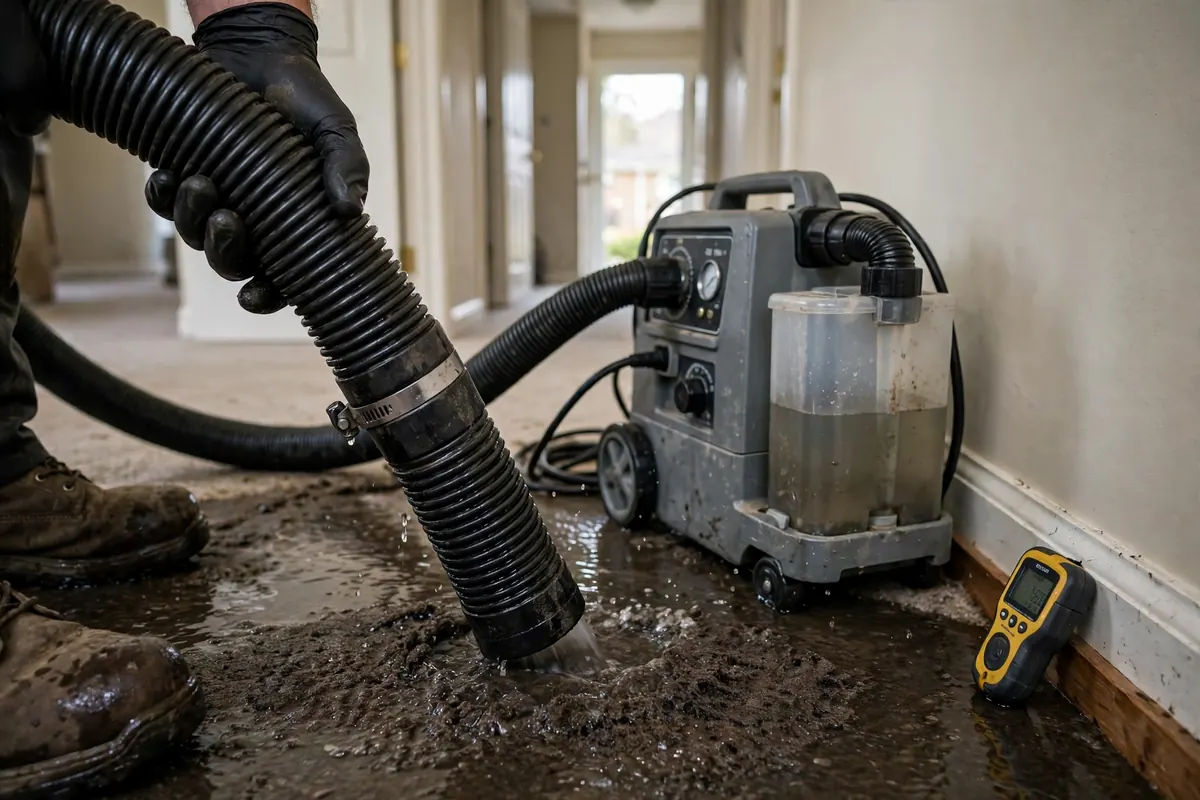
Water extraction is the step that decides the whole job. Crews pump out standing water, then use weighted extraction tools to pull water from carpet, pad and subfloor. Thorough extraction can remove most of the water in a room in hours, which cuts drying time from weeks to days and often saves flooring.
Drying equipment works by evaporation, and evaporation is slow. Extraction works by physically removing water, and it is fast. A room that gets a half-hearted pass with a vacuum can carry hundreds of gallons into the drying phase in its pad, subfloor and wall bases. A room that is extracted properly hands the dehumidifiers a fraction of that load. That is why two houses with the same leak can end up with wildly different bills: the difference is usually decided in the first few hours, before a single fan is placed. It is also why water damage restoration in Nashville always starts here, whatever caused the water.
Extraction equipment, matched to the surface
Each flooring type holds water differently, so each one gets a different tool. A crew that uses the same wand on everything is leaving water behind somewhere.
Carpet and pad
Most of the water in a carpeted room sits in the pad, not the carpet. Weighted extraction tools use the technician's body weight to compress the pad while the vacuum pulls, squeezing water out instead of skimming the surface. Done in repeated passes, this is what makes saving the carpet possible at all.
Hardwood floors
Hardwood traps water between the boards and the subfloor, where a wand cannot reach it. Panel drying systems and extraction mats pull water through the joints under negative pressure, and cupping is monitored while it happens. Speed matters here: hardwood that is extracted and dried early can often be saved; hardwood left wet usually cannot.
Tile, concrete and sheet vinyl
Hard surfaces give up their standing water easily with squeegees and extractors, but the water that ran under baseboards and into grout and concrete pores is the real load. Concrete holds moisture for a long time and releases it slowly, which is why the meter, not the surface feel, decides when these rooms are done.
Crawl spaces and basements
Under the house, extraction means pumping: portable pumps for standing water on the vapor barrier or soil, then drying aimed at joists and subfloor from below. Nashville crawl spaces add clay soil that holds water against the foundation, so under-house extraction and drainage checks run together.
Wall cavities and ceilings
Water inside a wall cannot be vacuumed out. Crews remove baseboards and drill small vent holes to push dry air into the cavity, or open the wall when insulation is soaked and holding water against the studs. The choice is made from meter readings at several heights, not from guesswork.
Contaminated water
When the water carries sewage or flood debris, extraction changes rules: protective gear, containment, and disposal of what the water touched. That work belongs to sewage cleanup and flood cleanup, with extraction as the first step inside a stricter process.
How water extraction Nashville jobs actually run
Assess and meter
The crew maps where the water went with moisture meters and thermal checks, room by room, before equipment comes off the truck. That map decides the extraction plan and becomes the first page of your documentation.
Extract
Standing water is pumped or vacuumed out, then weighted extraction works the carpet, pad and floors surface by surface. Furniture is blocked up or moved so water is not trapped under legs and bases.
Mitigate
Water mitigation starts the moment extraction ends: air movers and dehumidifiers are placed, wet baseboards and unsalvageable material come out, and the drying plan is set against a written dry standard.
Monitor to dry
Readings are taken daily and logged. Equipment is adjusted as materials dry and removed only when the numbers reach the dry standard. The log closes the mitigation part of the job and supports your insurance claim.
Weighted extraction is the difference on carpet
A plain vacuum wand skims the carpet face and leaves the pad loaded. Weighted extraction tools, including ride-on and stand-on extractors, press the carpet and pad together under the technician's full weight while the vacuum draws, physically squeezing water out of the pad the way you would wring a sponge. Repeated passes can pull the large majority of the water out of a carpet assembly in a single visit. That is the difference between drying a carpet in place over a few days and pulling the pad, floating the carpet, and adding demolition and replacement to the bill.
Then the meter takes over
Once the visible water is gone, the job runs on numbers. Pin meters read moisture inside wood and drywall; pinless meters scan floors and walls for wet areas without leaving holes. Readings from an unaffected part of the house set the dry standard, and drying continues until the wet materials match it. Skipping this step is how a room that feels dry grows mold in the wall cavity six weeks later: the surface dried, the structure did not, and nobody measured the difference.
Emergency water extraction, around the clock
Extraction is the emergency. A burst pipe at midnight does not need a quote first; it needs the water stopped and a crew pulling water out before it finishes wicking into every wall it can reach. Emergency water extraction Nashville response through this service runs the same way at 3am as at 3pm: the request is read, a local provider is dispatched, and the meter map and extraction start on arrival.
While you wait, the first hour still belongs to you: shut the water off at the main, keep power off in wet rooms, and photograph everything before it moves. The contact page carries the full checklist in order.
Standing water right now?
Tell us the ZIP code, what happened and whether the water is still coming in. That is enough to get extraction moving.
Request Emergency HelpOpen 24 hours, 7 days a week, across Nashville and Davidson County.
Coverage across the county
Water extraction Nashville TN coverage runs across the full service area: the crawl-space ranches of Madison, Donelson and Antioch, older homes in East Nashville and Germantown, and the growth suburbs from Mount Juliet to Smyrna. The same extraction and mitigation standard applies everywhere, and the service areas page lists every community and ZIP code covered, 23 ZIP codes in all.
Wondering what all this costs before you call? Extraction and drying are the mitigation bill, and published Nashville ranges put a typical mitigation job at $2,000 to $5,000. The water damage restoration cost guide shows how that bill is built, line by line.
- Extraction quality is drying time. Water removed by machine today is water the dehumidifiers never have to evaporate, and drying days are a billed line. This is water removal Nashville homeowners can verify: gallons out on day one, readings logged every day after.
- The dry standard is a number. Unaffected materials in your own house set it, and daily readings prove when the wet ones reach it.
- Mitigation protects the claim. Insurers expect prompt, documented drying. A meter log from day one is the record that the loss was handled properly.
Common questions about water extraction
How fast can a crew get here for emergency water extraction in Nashville?
Emergency requests are answered around the clock, and extraction is treated as the first job, not a job that waits for business hours. Actual arrival depends on where you are in Davidson County and how many storm calls are running, but the standard to hold a provider to is simple: standing water should come out the same day it is reported, because every hour it sits, more drywall, flooring and framing gets wet.
Can carpet and pad be saved after flooding?
Often, yes, when the water was clean and extraction starts quickly. Weighted extraction pulls water out of both the carpet and the pad underneath, which is where most of the water hides. Carpet that sat in dirty water, or carpet and pad soaked by a sewage backup, is a different case: porous material that contaminated water has touched usually has to come out. A good crew tests and tells you which case yours is before anything is thrown away.
What is the difference between water extraction and water mitigation?
Extraction is the removal of standing and trapped water: pumping, vacuuming and weighted extraction of floors and materials. Mitigation is everything done after that to stop the damage spreading: placing air movers and dehumidifiers, monitoring moisture daily, protecting contents and removing materials that cannot dry. Extraction is an event measured in hours. Mitigation is a process measured in days. Both belong on the same written scope, priced as separate lines.
How do you know when the structure is actually dry?
By meter readings, not by touch. A surface can feel dry while the wall cavity or subfloor behind it is still wet. Crews use pin meters in wood and drywall and pinless meters across floors, and they compare readings against the same materials in an unaffected part of the house: that unaffected reading is the dry standard. Equipment comes out when the wet readings meet the dry standard, and the daily log of those readings is part of your insurance record.
Can I extract the water myself with a shop vac?
For a small clean-water spill on a hard floor, a shop vac and towels can be enough. The limits show up fast: a shop vac has a fraction of the suction of a truck-mounted extractor, it cannot do weighted extraction on carpet and pad, and it tells you nothing about water that has already wicked into walls. Household dehumidifiers also pull roughly 20 to 30 pints a day against 80 to 150 for industrial units. If the water covered more than a small area, touched drywall, or came from a dirty source, DIY extraction usually leaves the expensive part behind.
Is extraction billed separately from drying?
It should be. Extraction is priced by the area and the water involved, drying is priced by the equipment placed and the days it runs, and the two are different lines on an honest scope. If a quote lumps them into one unexplained number, ask for the breakdown before you sign. Our cost guide shows how the lines fit together and what published Nashville ranges look like for the whole mitigation bill.
Every hour of standing water adds to the bill.
Get extraction started now, while the water is still where the machines can reach it, and the rest of the job stays smaller.
Get Help Now