Flood Cleanup Nashville, From Pump-Out to Fully Dry
When the Cumberland or Mill Creek comes up, flood cleanup Nashville residents need is not a bigger version of a plumbing job. The water arrives carrying silt, fuel, chemicals and sewage, it gets into crawl spaces and wall cavities a mop will never reach, and the cleanup order matters as much as the effort. This page walks through that order, the safety rules that come first, and how this service connects you with independent local providers who do flood work across Davidson County.
- Safety and power first, always
- Flood water treated as contaminated
- Documented for flood claims
- Independent local providers
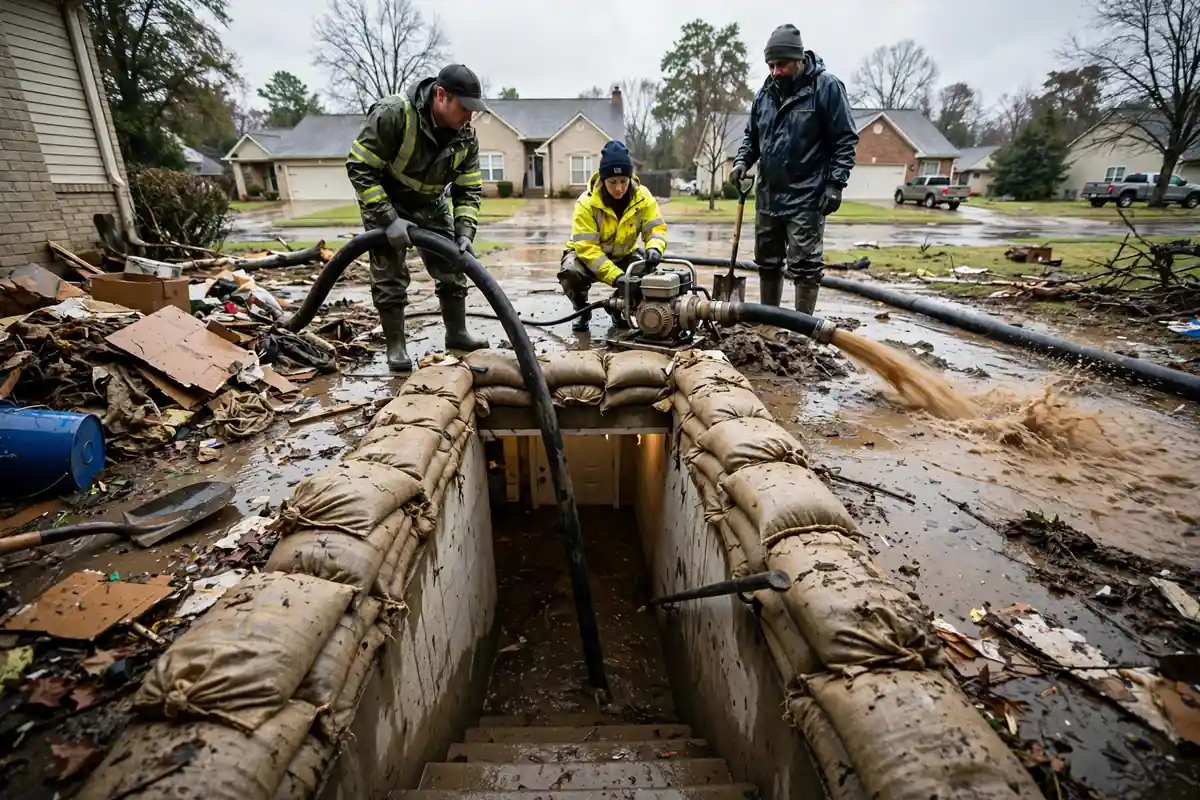
Flood cleanup Nashville: the order of work
Flood cleanup in Nashville starts once the water drops and the power is safe: pump out the standing water, muck out silt and damaged material, disinfect everything the water touched, then dry the structure with metered readings. Flood water is treated as contaminated, so the order of work matters more than speed.
Rushing the order is how flood jobs go wrong. Disinfectant sprayed on silt is wasted. Drywall closed over a wet, contaminated cavity is a second demolition waiting to happen. Furniture saved before the photographs are taken is a claim that cannot be paid. The steps below are the sequence Nashville flood damage restoration work actually follows, and knowing them lets you judge any provider's plan before you sign it.
May 2010: the flood Nashville still plans around
On the first weekend of May 2010, more than 13 inches of rain fell on Nashville in two days. The Cumberland River rose to its highest level since before the dam system was built, and the creeks got there first: Mill Creek through Antioch, Richland Creek through west Nashville, Whites Creek to the north. Bellevue, which most residents did not think of as riverfront, went under along the Harpeth. Pennington Bend and Bordeaux took the Cumberland directly. Thousands of homes flooded, many of them outside every mapped flood zone, owned by people with no flood policy because nobody had ever told them they needed one.
That weekend is why Nashville flood damage restoration is its own discipline here rather than a line on a services list. The city learned that its flood risk is a creek risk: small watersheds that rise in hours when storms stall, drainage that backs up into streets and yards, and low ground in Antioch, Donelson and Hermitage that collects what the creeks cannot carry. About 49 inches of rain a year keeps the clay soil near saturation for much of the winter and spring, so a hard rain runs off instead of soaking in.
The homes carry the history too. The postwar brick ranches of Madison, Donelson and Antioch sit low on vented crawl spaces, and a creek that tops its bank puts water under the whole house before it reaches the front door. Bellevue's subdivisions along the Harpeth and the older streets of East Nashville and Inglewood each have their 2010 high-water stories. When a provider assesses your home, that history is part of the assessment: where the water came from last time is usually where it comes from next time.
- Nashville
- Madison
- Donelson
- Antioch
- Bellevue
- East Nashville
- Hermitage
- Brentwood
- Goodlettsville
- Hendersonville
- Mount Juliet
- Smyrna
- La Vergne
- Franklin
- Berry Hill
What flood water brings with it
Restoration work sorts water into categories, and flood water is category 3, the contaminated kind, every time. It has crossed roads, yards, garages, septic systems and farmland on its way to your door. It is not the water itself that drives the cleanup rules. It is what the water is carrying, and what it leaves behind in every porous surface it touches.
This is also where flood cleanup parts company with a sewage job inside the home. The contamination logic is the same, and our sewage cleanup page explains the protective equipment and disposal rules in detail. The difference is scale: flood water touches everything at floor level and below, including the crawl space, the ductwork and the soil the house sits on.
- Silt and mud. Fine river silt settles into flooring joints, wall bottoms and crawl spaces, and holds moisture against materials long after the surface looks dry.
- Fuel and chemicals. Heating oil, gasoline, pesticides and cleaning chemicals float on flood water and soak into the same porous materials, which is one reason flooded drywall and insulation come out rather than clean up.
- Sewage and bacteria. Storm systems surcharge and septic systems flood. Assume bacteria in any water that crossed a yard or a road, and disinfect hard surfaces accordingly.
- Debris you cannot see. Glass, nails and sharp metal settle in silt. Boots are not optional in a flooded room, even your own.
Pump out, muck out, disinfect, dry
Make it safe
Power to flooded areas stays off until an electrician or the utility clears it. Gas appliances that went under are not relit. Nobody wades in until the electrical question is answered.
Document
Every room photographed and filmed before anything moves, including the crawl space and the water line on the walls. This record carries the flood claim or the assistance application.
Pump out
Standing water is pumped and extracted. In a crawl space ranch this is the long stage, and it is the same trade as our water extraction and mitigation work, done in protective gear.
Muck out
Silt, debris and soaked porous materials come out: drywall cut above the water line, insulation, carpet and padding. What flood water soaked into a porous material, disinfection cannot reliably reach.
Disinfect and dry
Hard surfaces are cleaned and disinfected, then the structure dries under air movers and dehumidifiers with daily moisture readings. A flooded structure starts wetter than a leak, so drying runs at the longer end of the usual range.
Rebuild
Only on dry readings. Insulation, drywall, flooring and trim go back in, and appliances and the HVAC system are inspected or replaced before they run again.
Safety rules for the first day back in
- Do not enter a flooded room if water is near outlets, appliances or the panel, until the power is confirmed off.
- Boots and gloves on, every time. Keep cuts and open wounds out of flood water entirely.
- Keep children and pets out of flooded rooms and yards until surfaces are cleaned.
- Never run a furnace, water heater or air handler that has been underwater. Silt in a burner or motor is a fire risk, not a drying shortcut.
- Wash hands and any skin that touched flood water before eating or drinking.
- If the smell of fuel is strong, leave and call the fire department's non-emergency line for advice.
Flood cover is a separate policy, and 2010 proved it
What a homeowners policy does
It covers water that starts inside the home: the burst pipe, the failed heater. Flood damage restoration Nashville homeowners need after a creek rises sits outside that cover, even when the creek is usually a ditch. The distinction feels unfair at the kitchen table and is absolute in the policy wording. A sump pump or sewer backup endorsement covers two narrow cases and is worth asking your insurer about by name.
What a flood policy does
A National Flood Insurance Program policy, or a private flood policy, covers the cleanup and rebuild after rising water, and it can be bought outside the mapped high-risk zones, where 2010 did much of its damage. Policies usually take 30 days to start, so the time to buy one is a dry month, not a wet forecast. If you are uninsured after a declared disaster, federal assistance may help with essentials, and it starts from the same photo record.
General patterns, not advice about your own cover. For the cost side of a flood job, the published ranges and quote-reading method are on our restoration cost guide, and the full service starts from the water damage restoration Nashville homepage.
Common questions about flood cleanup
Does homeowners insurance cover flood cleanup?
Standard homeowners policies do not cover rising water from outside the home. Flood cover comes from a separate flood policy, usually through the National Flood Insurance Program, and many Nashville homes in the creek corridors do not have one because they sit outside the mapped high-risk zones. That gap was the hard lesson of May 2010, when much of the flooding happened in areas nobody called a flood plain. If you have a flood policy, start the claim the day the water drops. If you do not, disaster assistance and the cleanup still start the same way: document everything first.
Is flood water dangerous to clean up myself?
Treat it as contaminated, because it is. River and creek water that has crossed roads, yards, septic systems and fuel storage carries bacteria, chemicals and sharp debris you cannot see. The safety rules are simple: power off to flooded areas before anyone wades in, boots and gloves on, no children or pets in the water, and cuts or wounds kept out entirely. Small, shallow flooding on a hard floor is manageable with care. Water that has been through a crawl space, a garage or a septic area, or anything deeper than a few inches, is a professional job with protective equipment.
What has to be thrown away after a flood, and what can be saved?
Porous materials that flood water has soaked are usually removed: drywall up to above the water line, insulation, carpet and padding, particleboard furniture, mattresses and soft toys. The water carried contamination into them and they cannot be reliably disinfected. Hard materials clean and disinfect well: concrete, tile, solid wood that is dried promptly, metal and glass. Appliances and the HVAC system need inspection before they run again, because silt gets into motors and burners. Every item removed goes on the inventory list, which is part of a flood claim or a disaster assistance application.
How long does flood cleanup take?
The pump-out and muck-out on a typical home takes one to three days once the water has dropped and access is safe. Disinfection follows, then structural drying runs 3 to 5 days or longer, because a flooded structure starts wetter than a plumbing leak and flood season is humid. Rebuild is the long clock again, weeks rather than days. The honest sequence matters more than the estimate: nothing is rebuilt until the moisture readings say the structure is dry.
What should I do first when flood water enters my home?
Safety before property. If water is near electrical outlets, appliances or the breaker panel, stay out and let the utility or an electrician make it safe. Keep children and pets out of the water. When it is safe, photograph and video every room before you move anything, move documents, medicines and valuables above the water line, and call your insurer or flood policy line. Do not start ripping out drywall until the record is made, and do not run a furnace or air handler that has been underwater.
Our street flooded in 2010 and the water came close again last spring. What actually helps?
The unglamorous things. Know your home's flood history and watch the Mill Creek and Cumberland gauges when storms stall over the county, because Nashville flooding is usually a creek problem before it is a river problem. Keep the crawl space vents and yard drainage clear, store nothing irreplaceable at floor level in the lowest rooms, photograph your home and contents on a dry day for the record, and price a flood policy even outside the mapped zones. The 2010 flood put water into thousands of homes that had never flooded before.
The water has dropped. The clock has not stopped.
Flood damage grows in the days after the water leaves, as soaked materials sit in Nashville humidity. Get the pump-out, the record and the drying started in the right order. Reach out now and get connected with a local provider who does flood work across Davidson County.
Get Help Now