Water Damage Restoration Cost Nashville TN: What Homeowners Actually Pay
If you are trying to pin down the water damage restoration cost Nashville TN homeowners really face, you have probably noticed nobody publishes a straight answer. Franchise pages list services and hide the money. This guide publishes it: the sourced Nashville ranges, the two-bill structure that confuses every first quote, and how each part of the job is priced, so you can judge any scope put in front of you.
- Ranges labeled as published benchmarks
- Mitigation priced apart from rebuild
- No invented prices, ever
- Open 24 hours, every day
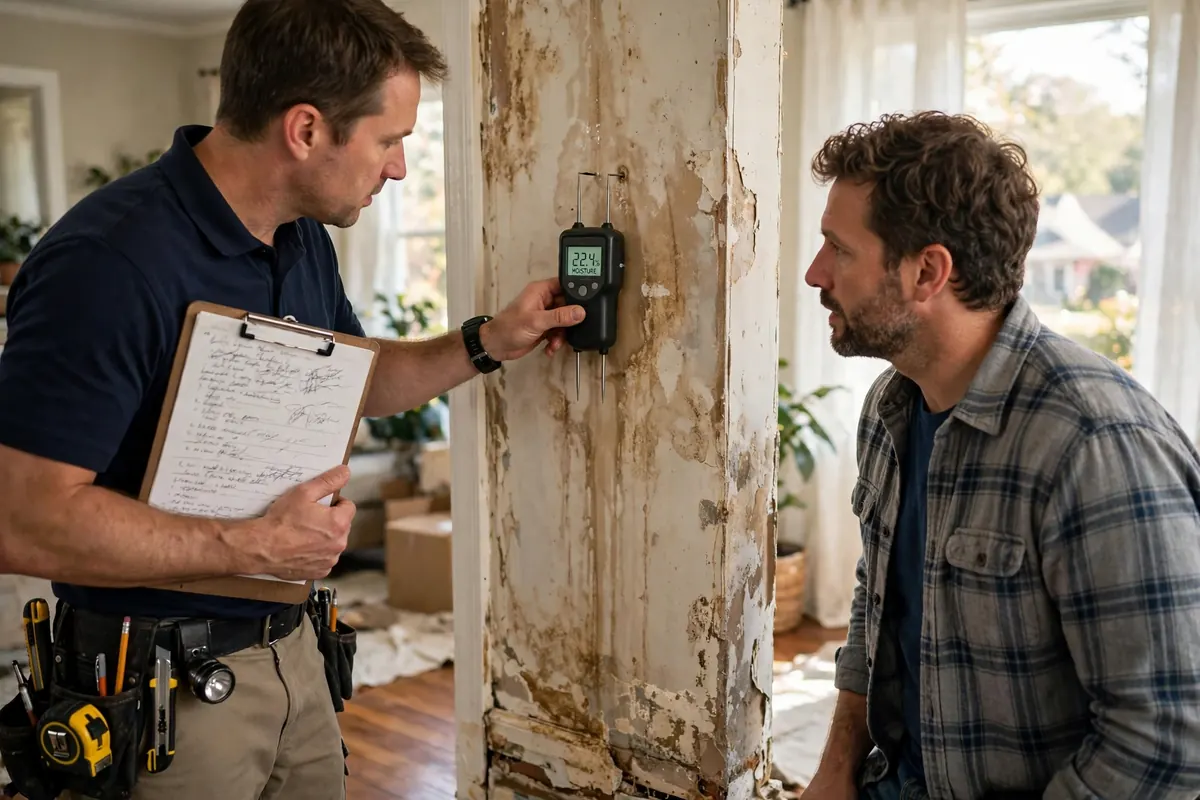
Water damage restoration cost Nashville TN at a glance
Water damage restoration in Nashville comes as two bills, not one. Published local ranges put mitigation, meaning extraction and drying, around $2,000 to $5,000 for a typical home job. Rebuild is billed separately, and severe whole-home losses can reach $15,000 to $30,000. This guide breaks both bills down by category and job type.
One honest warning before the numbers. The ranges on this page are published benchmarks: figures a Nashville operator publishes for its own work, cross-checked against national cost references. This site is a referral service, not a restoration company, so these are never our prices and never a quote for your home. Your number comes from a written, itemized scope for your rooms, your materials and your water. What this guide gives you is the yardstick to judge that scope against, which is the thing homeowners in this market have never had. For the full picture of how a job runs, start with water damage restoration in Nashville on the home page.
Two bills, not one: mitigation and rebuild
Bill one: mitigation
Mitigation is the emergency work that stops the loss getting bigger: extraction, demolition of material that cannot dry, drying equipment, disinfection where the water requires it, and daily moisture monitoring. It is priced by area, water category, equipment and days. On published Nashville ranges, a typical home mitigation bill lands around $2,000 to $5,000. It ends when the structure reads dry, not when the rooms look finished, because they will not look finished yet.
Bill two: rebuild
Rebuild is putting the rooms back: drywall, insulation, flooring, cabinets, trim and paint. It is priced by trade and material, like any remodeling work, and it is where a big loss gets expensive. On severe whole-home losses, mitigation plus rebuild together can reach $15,000 to $30,000 on published ranges. The trap is a first quote that shows only bill one while sounding like both. Ask which bill you are looking at, every time.
| Part of the job | Published Nashville benchmark | How it is billed |
|---|---|---|
| Typical mitigation (extraction and drying) | $2,000 to $5,000 | Whole mitigation scope, itemized by line |
| Severe whole-home loss (mitigation plus rebuild) | $15,000 to $30,000 | Two scopes: mitigation, then rebuild by trade |
| Water extraction | Part of the mitigation range above | By area affected and water category |
| Structural drying | Part of the mitigation range above | Per machine, per day, plus monitoring visits |
| Demolition and disposal | Part of the mitigation range above | By material removed and volume hauled |
| Rebuild (drywall, flooring, trim, paint) | Inside the severe-loss range above | By trade and finish material chosen |
Benchmarks are published ranges from Nashville operators and national cost references, shown so you can judge a quote. They are not this site's prices: this site performs no restoration work. Your price is the written scope a provider gives you for your home.
The category of water sets the floor for the price
Restoration pricing starts with what was in the water. The three categories change the safety gear, the materials that can be saved, and the disinfection the job requires.
Category 1: clean water
Supply lines, water heaters, appliance fills. The cheapest category to restore because materials can usually be dried in place and no disinfection is needed. Most burst pipe jobs start here, though clean water left sitting degrades into category 2 within a couple of days.
Category 2: grey water
Washing machine and dishwasher discharge, toilet water with urine only, water that has sat. Grey water carries enough contamination that porous materials are judged harder, disinfection enters the scope, and some carpet and pad that clean water would have spared has to come out.
Category 3: black water
Sewage, rising flood water, and any water that has crossed the ground outside. The most expensive category: protective gear and containment, every porous material it touched removed, full disinfection. This is the world of sewage cleanup and flood cleanup.
What legitimately raises a quote
More rooms and more water, obviously, but also: water that reached wall cavities and needs cavity drying or opening; soaked insulation that cannot dry; hardwood that needs panel drying to be saved; crawl space work under a house; category 2 or 3 water with its removal and disinfection rules; and after-hours emergency response. Each of these is a real cost driver you can ask to see justified with readings and photos.
What legitimately lowers it
Speed, mostly. A source stopped in the first hour, extraction the same day, and furniture moved before it wicks water all mean fewer wet materials, fewer drying days and less demolition. Access helps too: a clear path to the wet rooms and a crawl space a crew can actually work in. The cheapest line on any quote is the hour you did not wait.
How to read an itemized scope
A complete scope shows you
- Each room and each material affected, with the meter readings that put it on the list.
- Extraction priced by area, separate from drying.
- Each drying machine, its day rate, and the expected number of days.
- Demolition listed by material, with disposal included or excluded in plain words.
- The dry standard the job will be measured against.
- Whether rebuild is in this number or a separate scope, stated plainly.
- A change order rule: no extra work billed without your written approval.
Red flags that should stop a signature
- Flat plans. One Nashville site sells water restoration as subscription style plans priced from $149 to $999. Real drying work is priced from your rooms and readings, not a menu. Walk away from plan pricing.
- One lump sum. A single number with no lines cannot be checked, compared or disputed. It exists to be unchallengeable.
- Pressure while the floor is wet. Urgency is real, but a provider who will not give you ten minutes and a written scope is using the water as a sales tool.
- Readings they will not show you. If the moisture numbers justify the demolition, they should be in your hand, logged daily.
- Scope that grows by phone. Extra work happens on real jobs. It should still arrive as a written change order before it is billed.
Insurance sits across all of this. For a sudden, accidental loss, the mitigation bill is the part insurers most expect to see, backed by photos and the daily moisture log. Rebuild is settled against the claim once the structure is dry. Where homeowners get hurt is the gap between the two: a home left wet because the first quote scared them, growing damage the policy then argues about. A complete, documented mitigation scope is not just a purchase; it is the evidence your claim stands on. When you are ready, contact the service and describe the job; the provider who visits confirms their scope and full price with you directly before any work starts.
Common questions about restoration costs
Why did my two restoration quotes differ by thousands of dollars?
Usually because they are not quoting the same job. One scope may include pulling baseboards and drying wall cavities while the other surface-dries the room. One may include rebuild, the other may stop at dry. Quotes also grow when a company prices in demolition it has not justified with meter readings. The fix is to compare line by line: same rooms, same materials removed, same drying days, same dry standard. A quote that will not break itself down cannot be compared, and that is information in itself.
Is the rebuild included in the restoration quote?
Often it is not, and this is the single most common source of quote shock in this trade. Mitigation (extraction, drying, demolition) and rebuild (drywall, flooring, paint, trim) are frequently separate scopes, sometimes with separate providers. Homeowners have signed a mitigation quote believing the house would be put back, then faced a second bill they never budgeted for. Ask one question before you sign anything: does this number leave my home finished, or only dry? Get the answer in writing.
Does insurance pay the mitigation bill or the rebuild bill?
For a covered sudden loss, usually both, because both are part of repairing the damage the water caused. Mitigation is often treated as urgent and expected: insurers can push back on secondary damage if a home was left wet. Rebuild is paid against the claim after the deductible, at the scope the adjuster agrees. Gradual leaks and rising flood water are the usual exceptions. Keep every invoice and the daily moisture log; they are the paperwork the claim runs on.
Should I pay anything before the work starts?
Be careful with large upfront payments on an emergency job. The normal pattern is a written scope first, work billed as it is performed, and insurance paying its share against documentation. A provider who demands the full amount in cash before a meter comes out is showing you a red flag, not a policy. Small deposits for scheduled rebuild work are a different matter and should still be in the written agreement.
What does one day of drying actually cost?
Drying is billed per machine per day: each air mover and each dehumidifier on site is a daily line, plus monitoring visits. That is why the day rate and the machine count matter more than the daily total a company quotes you verbally. Ask for the per-machine day rate in writing and how many machines the scope places. A thorough extraction on day one is the cheapest drying discount there is, because it shortens every day after it.
Is the cheapest quote ever the right choice?
Sometimes a lower quote is honest efficiency: better extraction, fewer drying days. But the cheapest quote in this trade is often cheap because it skips steps that only show up later: no wall-cavity drying, no daily readings, no disinfection on grey water. Wet structure left behind becomes a mold problem with its own bill. Judge quotes on scope completeness and documentation, then on price. The number you want is the lowest complete scope, not the lowest number.
Now get the number for your home, in writing.
Reach out with what happened and where. A local provider maps the damage, meters it, and puts an itemized scope in your hand before any work starts.
Get Help Now